Date: 11/8/2026
Cybersecurity
Your AI agent is secure, the repository it recommends is not
Thousands of GitHub repositories pose as AI skills and MCP servers. The skill file is clean; the attack is in the README. In testing, Claude Code, ChatGPT and Gemini found them unprompted and relayed the install steps. What was and was not demonstrated, and who decides what your agent may install.

TL;DRResearchers found thousands of GitHub repositories posing as AI skills and MCP servers. The skill file is clean; the attack is in the README, which points you at a ZIP carrying an infostealer. In testing, Claude Code, ChatGPT and Gemini found such repositories on their own and relayed the installation instructions. No agent executed anything. The missing decision: who decides what your agent may install. |
A developer asks their AI agent to find a skill. The agent searches, finds a GitHub repository with a polished README and clear installation instructions, and passes them on. The repository belongs to an attacker. The agent did nothing you can fault it for: it searched, it read, it summarised. That is exactly what you switched it on to do.
The model is not compromised. Your prompt defences did not fail. No prompt injection was involved. What happened is that someone wrote the documentation your agent was going to read.
What was actually reported, and what was not
On 20 July 2026, Island researcher Oleg Zaytsev published an analysis of a campaign called FakeGit: roughly 7,600 malicious GitHub repositories, created from about 6,600 profiles. Around 1,400 of them relate to AI tools, agents or workflows, and over 800 pose specifically as Skills or MCP servers. The AI wave built through March and peaked in April 2026, with nearly 300 new AI-related repositories in that single month.
On 8 October, Apiiro reported that the campaign resumed on 4 October, now across 17,610 repositories. More than 13,000 of them were pushed in 34 hours, peaking at 2,999 an hour. Of the commits sampled, 97 percent touched only the README, and 88 percent pointed the Download button at a ZIP that installs SmartLoader. Not a single new repository had to be created: the fleet was already there and was simply re-aimed.
In early November the subject resurfaced through a post by researcher Thomas Roccia about 73 repositories posing as Claude skills, Codex, MCP servers and OpenClaw, 51 of which were still live that morning. I have not been able to corroborate those figures independently; it remains a single report from a single researcher. What I can corroborate is the mechanism he describes, because it appears identically in Island's research.
One figure deserves a warning, because it is misquoted almost everywhere. Island measured more than 14 million downloads of release assets across some 200 campaign repositories. Zaytsev states explicitly that this includes repeated requests and automated activity and should not be read as infections. Anyone presenting it as an infection count is selling you something.
The attack was not in the model
An AI agent that can install software and run commands does not trust one thing. It trusts five, and they fail independently:
- The model. Whether it does what you ask and refuses what it should refuse.
- The instructions. The system prompt, the skill definition, the rules you give it.
- The repository. Where it sources the capability from.
- The software. What actually comes out of there, and what it does.
- The environment. Which permissions, sessions and keys are within reach while it runs.
Most AI security work of the past year has gone into the first two. Jailbreaks, prompt injection, guardrails, evaluations. This campaign touches neither. A model that correctly refuses to write malware will happily read a README and summarise the installation steps, because reading and summarising documentation is not an attack, it is the assignment.
That distinction decides which control works. Against prompt injection you use filtering. Against this you use a list of what is allowed in, and an environment where a bad install cannot immediately reach your production keys.
From README to workstation
The chain is unremarkable, and that is the point. Island describes a concrete example: a repository posing as an MCP server for Databricks, with a README promising to expose 263 Databricks tools. The "Download Latest Release" button points to a ZIP committed straight into the repository. The instructions say: download, extract, run.
That ZIP holds three files. A launcher, application.cmd, containing a single line: start the second one. The second is luau.exe, which Island describes as a renamed Lua runtime. The third is ico64.txt: roughly 300 kilobytes of heavily obfuscated Lua on one line. A text file that is not a text file. The names vary from repository to repository; the structure does not, a launcher, a runtime, and a payload disguised as a text, icon, licence or data file.
For what happens next, Island draws on Derp.ca's analysis of other samples: the console window is hidden, the command server address is retrieved from a value stored in a smart contract on Polygon, persistence is established through a scheduled task, and encrypted later stages are pulled from GitHub. At the end sits StealC. The IOCs are public.
What StealC takes is why this is a board matter rather than a helpdesk ticket: browser passwords, cookies, active sessions, browser extension data, email and remote-access credentials, screenshots and host information. Note the active sessions. A stolen session cookie is already past your multi-factor authentication. Resetting passwords is therefore not enough; you have to revoke sessions, OAuth grants, API tokens, and cloud and developer credentials.
For anyone turning this into detection rules: execution by the user themselves (T1204.002), a payload masquerading as a harmless file type (T1036), persistence through a scheduled task (T1053.005), and theft of active web sessions (T1539).
A registry listing is not a seal of approval
Island found more than 600 listings of campaign repositories across public catalogues for skills and MCP servers: LobeHub, Glama, MCP.so and MCP Market. The researchers could not establish whether those listings were submitted manually or indexed automatically. For you it makes no difference. The conclusion is the same: appearing in a catalogue tells you nothing about who published the thing.
The signals were there, had anyone looked. The original project that was cloned has over 67,000 stars and 7,600 forks. The fake copy had 63 stars and 18 forks. A human spots that gap in two seconds, but only by looking at the page rather than at a summary of it. An agent reading a README and relaying it does not count stars. Neither does a developer trying to get a plugin working at 16:40.
The lures were written for your environment
This is the part that moves it from an IT problem to a governance problem. Island classified the malicious Skill and MCP repositories by the theme they used as bait:
- 62 percent were positioned for enterprise or developer-internal use.
- About a third concerned enterprise operational data.
- About a quarter concerned source code.
- Roughly one in six concerned credentials or secrets.
- Nearly two thirds of the MCP repositories were framed as connectors for cloud services, databases or APIs.
So this is not consumer malware that happened to land on a work laptop. The copy was written for the person who has production access. Someone looking for an MCP connector to their data warehouse is by definition someone holding credentials for that data warehouse. That is not an accident of the campaign; it is its design.
The decision nobody has made
Try asking this out loud in your own organisation: which AI skills and MCP servers are running right now, installed by whom, from which repository, at which commit? In most organisations the answer is not "we are not entirely sure" but "we do not record that anywhere". That is a different problem, and a bigger one.
Because without that register you cannot answer the follow-up questions either. Do your agents inherit the developer's credentials? Can they reach production? Is what they download and execute recorded? Can anyone suspend an agent without taking down the whole development pipeline? Does your incident response plan cover compromised AI tooling? It all starts with an inventory, and that is precisely the step that gets skipped because it is dull.
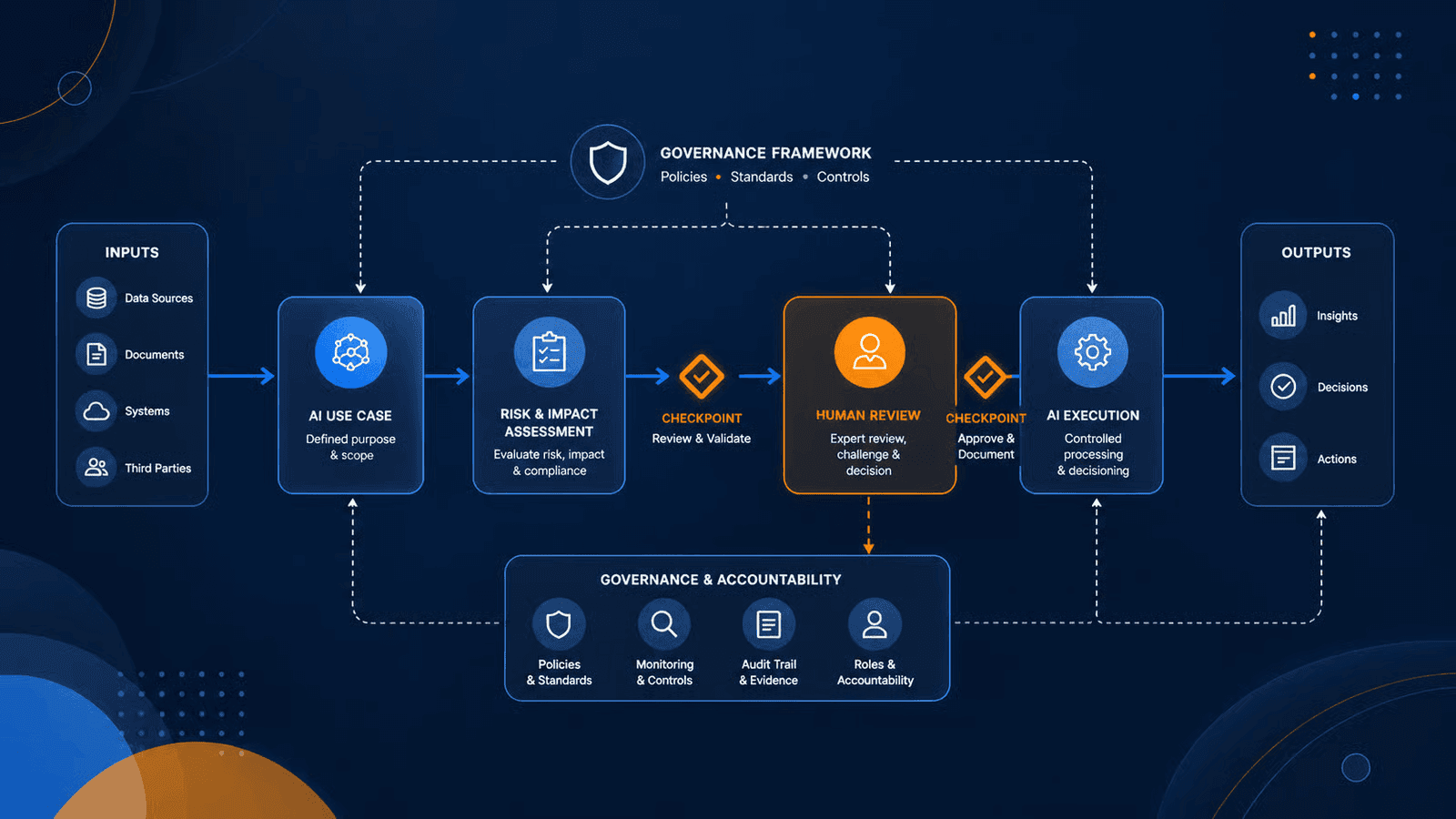
ISO/IEC 42001 and the NIST AI Risk Management Framework both ask you to know your AI assets and assess your suppliers. Neither prescribes how you approve an MCP server, or who is allowed to. That is not a shortcoming of those frameworks, it is the part you have to fill in yourself, and it is exactly where policy on paper and reality on the workstation come apart.
What to do this week
Four things, ordered by what returns the most soonest.
- Build the inventory. Which agents are running, with which skills and MCP servers, installed by whom, from which repository, at which commit or hash. Without this the rest is guesswork.
- Introduce one rule. An AI capability that installs through a downloaded executable does not go in. A real MCP server or skill is source code with a manifest, not a Windows ZIP holding a launcher and a runtime. This rule can be introduced today and would have stopped this entire campaign.
- Hunt backwards. Downloads of ZIP files from GitHub on developer workstations, and processes launching a runtime with a text, icon or data file as the argument. That last pattern is rare enough to serve as a detection rule.
- Look at the permissions. Which credentials does an agent inherit from the developer who starts it, and can it reach production with them? This is the question that decides whether a bad install becomes an incident or a footnote.
After that, and this takes a quarter rather than a week: an approved catalogue of skills and MCP servers; pinning to a commit or hash instead of to "latest"; every new capability evaluated first in an isolated environment with no browser sessions, cloud keys, SSH keys or production data; and logging of what the agent itself initiates, downloads, clones, shell commands, changes to skill directories and MCP configuration. That last one is the only way you will still be able to reconstruct what happened six months from now.
Not all of this is equally urgent for everyone. If your agents run read-only against a test environment, the catalogue matters more than the sandbox. If they have shell access on a workstation holding cloud keys, it is the other way round.
The 08:15 decision
What follows is a hypothetical scenario, not a client incident.
At 08:15, Security notices that a developer installed an MCP server yesterday from a repository that landed on an IOC list overnight. The workstation had access to source code, internal repositories and cloud keys. There is no evidence of exfiltration. There is also no evidence that it did not happen, because what the agent downloaded and executed was never logged.
Now someone has to choose. Isolate the workstation and revoke every session and token belonging to that developer, or investigate first. Revoking means a team stops for half a day and the incident becomes visible across the organisation. Waiting means a few more hours in which a stolen session cookie, if there is one, is still valid.
The interesting question is not which choice is right. That depends on what was on the workstation. The interesting question is who is allowed to make that choice at 08:15, before the investigation concludes. If the answer is that it first needs a conversation with three people who are not awake yet, you already have your answer, and that is the first thing to fix, ahead of the catalogue.
In closing
The uncomfortable thing about this campaign is not that it is sophisticated. It is the opposite of sophisticated: a ZIP with three files and a README asking you to click past a security warning. It works because it lands on a layer nobody owns.
You have chosen your model. You probably have an AI policy somewhere. The question that is usually missing from it: which repositories is your agent allowed to trust, who decided that, and can you still reconstruct tomorrow what it executed yesterday?
Frequently asked questions
Does this mean our AI model is compromised?
No. There is no indication that a model, a set of model weights or a model provider was affected. The attack sits in the software an agent finds and recommends, not in the agent itself. That is also why model-level controls do nothing against it.
Did an AI agent install and run this by itself?
In what has been published: no. In Island's testing, Claude Code relayed the instructions from a malicious README to the user in one run, while in other runs it found the contents suspicious and advised against the repository. According to reporting by BleepingComputer, Claude Code in limited controlled testing cloned a malicious repository and downloaded the files, but stopped before execution. ChatGPT and Gemini recommended malicious repositories without ever being given a link. There is no documented case in the wild of an agent executing the payload itself. That distinction matters too much to let it blur.
Are those 14 million downloads 14 million infections?
No, and the researcher who measured the figure says so himself. These are GitHub's download counters, including repeated requests and automated traffic. It says something about the scale of the campaign and nothing about the number of victims.
Is checking the skill file enough?
No, and that is the heart of it. In the documented cases the skill or configuration file is clean; the attack is in the README and in a ZIP committed to the same repository. Scanning only the manifest files means scanning precisely the part that is not malicious. You have to look at everything that ships in the repository, at who publishes it, and at the commit history.
Does multi-factor authentication protect against this?
Not against the initial install, and only partly against the consequences. Alongside passwords, StealC steals cookies and active sessions, and a stolen session is already past the multi-factor step. That is why revoking sessions, OAuth grants and tokens on suspicion matters more than a password reset.
Is this a Windows-only problem?
The chain described here is Windows-specific: a .cmd launcher, an .exe runtime, and the "Windows protected your PC" prompt you have to click past. That says nothing about other campaigns, and the underlying problem is not platform-bound: an agent that trusts a README does so on any operating system.
Further reading
- Island: AgentBaiting, how fake AI skills and MCP servers delivered malware (20 July 2026)
- Island: the IOCs for this campaign
- BleepingComputer: FakeGit campaign uses 7,600 GitHub repos to push SmartLoader (21 July 2026)
- BleepingComputer: FakeGit returns with 17,610 malicious repos (8 October 2026)
- Apiiro: the research behind the October wave
- CyberBusters: AI inventory, use cases, autonomy and data flows
- CyberBusters: AI governance and ISO/IEC 42001